Wondering how to plan a custom home in Vintage Oaks without missing a key detail? You are not alone. Buying land and building in a master-planned Hill Country community can feel exciting and overwhelming at the same time, especially when lot sizes, utility setups, and design rules vary by section. This guide will help you understand how Vintage Oaks works, what to verify early, and how to make smarter decisions before you build. Let’s dive in.
Why Vintage Oaks Stands Out
Vintage Oaks at the Vineyard is a master-planned Hill Country community in New Braunfels, Comal County, located between San Antonio and Austin. Community materials describe the development as both 3,900 and 4,100 acres depending on the page, but the big-picture appeal stays the same: larger homesites, private owner amenities, and several neighborhood formats.
For many buyers, the draw is simple. You get room to spread out, access to private amenities for owners and authorized guests, and the chance to choose a homesite that fits your lifestyle. Canyon Lake is also noted on the community map as being about 10 minutes away, which adds to the location’s overall appeal.
Start With the Right Lot Type
In Vintage Oaks, your lot choice shapes almost everything that comes next. It affects your design flexibility, utility configuration, review process, and sometimes even your minimum home size.
The community includes homesites from about 1 to 14 acres, along with smaller-lot options for buyers who want less maintenance. Some sections are gated, and some are not, so it helps to compare neighborhoods based on how you want to live, not just the view.
Acreage Sections for More Flexibility
If you want a more traditional custom-home path, the acreage neighborhoods will likely be your starting point. These sections are designed for buyers looking for more land, privacy, and a broader range of home placement options.
Here are a few examples from the community:
- The Canyons offers 1+ acre wooded homesites, backyard greenbelts, higher elevations, and long views.
- Silver Oaks includes 1 to 2 acre homesites with flatter terrain and easier buildability.
- Champagne Hills features 1 to 2 acre gated homesites with rolling terrain, private cul-de-sacs, and wooded settings.
- Vineyard Ranch offers 5 to 14 acre homesites with easy-build topography, seasonal creek features, and horse-friendly use.
Lower-Maintenance Options
Not every buyer wants to start from a blank slate on a large lot. If you want a simpler path, Vintage Oaks also includes sections that may be a better fit.
The Grove has smaller lots, 50 to 70 foot widths, scenic open space, rolling topography, and homes generally ranging from 2,100 to 3,500 square feet. Buyers can choose from many floorplans and customize them. The Reserve is described as a home-lot package option with preselected floorplans rather than a pure lot-first custom build.
Know the Design Rules Early
One of the biggest mistakes custom-home buyers make is falling in love with a lot before understanding the restrictions. In Vintage Oaks, every property is subject to Community Design Guidelines, and there can also be neighborhood-specific restrictions.
That means you should review both the master covenants and the rules tied to the exact section you are considering. What works on one homesite may not work on another, even within the same overall community.
ARB Approval Comes After Closing
In Vintage Oaks, the Architectural Review Board process does not begin until after you close on the lot. Once you own the property, you can submit plans for review, and the community says that process can take up to 30 days.
This timing matters. If you are building on a schedule, you will want to factor that review window into your planning instead of assuming construction can start right away.
Construction Requirements Matter
Before construction starts, the community requires several items in place. These include ARB approval, a dumpster, a dump box, a chemical toilet, a construction entrance with culvert when needed, fire-suppression equipment, and payment of builder deposits and fees.
During construction, the builder must follow the approved plans, stay within construction timing requirements, and maintain a clean site. Landscaping paperwork is due no later than 30 days before anticipated completion, and landscaping must be fully installed within 6 months of move-in.
Understand Minimum Size and HOA Costs
Vintage Oaks gives buyers flexibility, but there are still base requirements to know. Minimum square footage depends on the neighborhood type.
- 2,300 square feet in non-gated acreage sections
- 2,700 square feet in gated acreage sections
- 2,100 square feet in The Grove
The community states there is no required deadline to begin building after you buy the lot, which can be helpful if you need time to plan. Once construction begins, though, the home must be completed within 1 year.
HOA assessments are currently listed as $700 annually in non-gated neighborhoods. Gated neighborhoods have additional assessments for gates and roads, so be sure to ask about the exact costs for the section you are considering.
Utilities Can Vary by Section
This is one of the most important parts of planning a custom home in Vintage Oaks. Utility service is not one-size-fits-all across the community.
According to the community information, acreage properties and The Grove receive water through Canyon Lake Water Service Company. Wastewater is handled by individual septic systems on acreage properties, while The Grove uses a neighborhood MBR facility. Fiber is available through GVTC, electric service may be through NBU or PEC depending on location, and gas service varies by unit.
Because of that, you should confirm the exact service package for the lot you want, not just the neighborhood in general. Small differences can affect both your build design and your budget.
Septic Planning in Comal County
For acreage sections with individual septic systems, early due diligence matters. TCEQ states that onsite sewage facilities must be designed from a site evaluation that reflects local conditions, and almost all systems require a permit before construction, installation, repair, extension, or alteration.
TCEQ also notes that local permitting authorities usually review plans and issue permits. In practical terms, that means your homesite conditions can directly affect your septic design, timeline, and cost.
Site Conditions Affect Your Home Plan
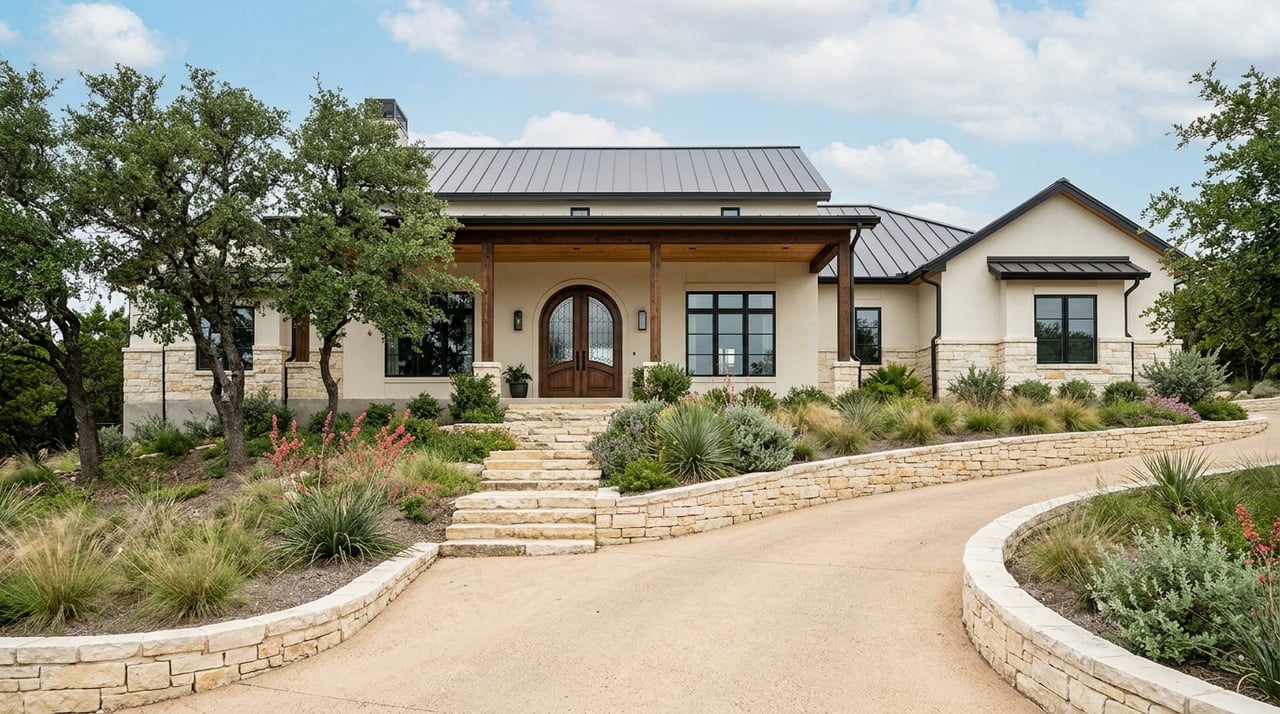
Vintage Oaks includes flat lots, rolling terrain, wooded areas, and higher-elevation homesites. That variety is part of the appeal, but it also means site placement is not just a design preference. It can be a major planning decision.
A flatter lot may support a simpler build approach, while a sloped or heavily wooded lot may require more careful positioning of the home, driveway, drainage, and septic components. This is why early lot research is so important when you are comparing options.
What to Check With Comal County
Comal County offers official resources for engineer information, plat viewing, septic record search, floodplain tools, and utility permit information. Before moving forward with a lot, it is smart to confirm:
- Utility availability for that exact parcel
- Easements that may affect building placement
- Drainage conditions
- Any floodplain constraints
- Septic-related records or permitting needs
These checks can help you avoid surprises after closing. They can also help you choose a lot that better matches the kind of home you want to build.
You Can Choose Your Builder
Vintage Oaks states that buyers may choose any builder as long as state, local, and ARB requirements are met. That gives you meaningful flexibility if you already have a builder in mind or want to compare options.
The community also offers a Builder Match Service that shares builder feedback from homeowners. Even with that flexibility, it is wise to choose a builder who is comfortable working within community guidelines and understands the realities of Hill Country lots.
A Simple Planning Path for Buyers
If you are trying to organize the process, this is the typical path for building a custom home in Vintage Oaks:
- Choose the neighborhood based on lot style and maintenance preferences.
- Review the master covenants and neighborhood-specific documents.
- Confirm utilities, zoning details, and lot conditions for the exact parcel.
- Close on the lot.
- Choose your builder and submit plans for ARB review.
- Complete pre-construction requirements and pay required fees.
- Build according to approved plans and site rules.
- Submit landscaping paperwork on time and complete landscaping within the required window.
This process is manageable when you break it into steps. The key is to make decisions in the right order so your lot, builder, and home design all work together.
How to Plan Smarter From Day One
If you are serious about building in Vintage Oaks, the smartest move is to treat the lot as the foundation of every later decision. A beautiful parcel may still come with design limits, utility differences, or site conditions that change what is practical.
Try to compare lots through a simple lens: buildability, restrictions, utility setup, timeline, and long-term fit for your lifestyle. When you do that, you are more likely to end up with a home that feels right both during construction and long after move-in.
Planning a custom home in Vintage Oaks can be an exciting way to create a Hill Country lifestyle that fits you. If you want help comparing lots, understanding community rules, and narrowing down the right path, connect with Ashley Lomas for clear, local guidance.
FAQs
What lot sizes are available in Vintage Oaks at the Vineyard?
- Vintage Oaks includes homesites from about 1 to 14 acres, plus smaller-lot options in sections like The Grove.
What is the minimum home size in Vintage Oaks?
- Minimum square footage is 2,300 in non-gated acreage sections, 2,700 in gated acreage sections, and 2,100 in The Grove.
Can you choose your own builder in Vintage Oaks?
- Yes. The community states you can choose any builder as long as state, local, and ARB requirements are met.
When does the Architectural Review Board process start in Vintage Oaks?
- The ARB process starts only after the lot has closed, and the review can take up to 30 days.
Do Vintage Oaks custom homes use septic systems?
- Acreage properties use individual septic systems, while The Grove uses a neighborhood MBR facility.
What should you verify before buying a lot in Vintage Oaks?
- You should verify the exact lot’s restrictions, utilities, easements, drainage, floodplain conditions, and any septic-related requirements early in the process.